Only 79,00€ away from free shipping
No products in the cart.
3,90 €
Out of stock
Out of stock
Delivery time unknown – please ask customer service. verkkokauppa@raworganic.fi
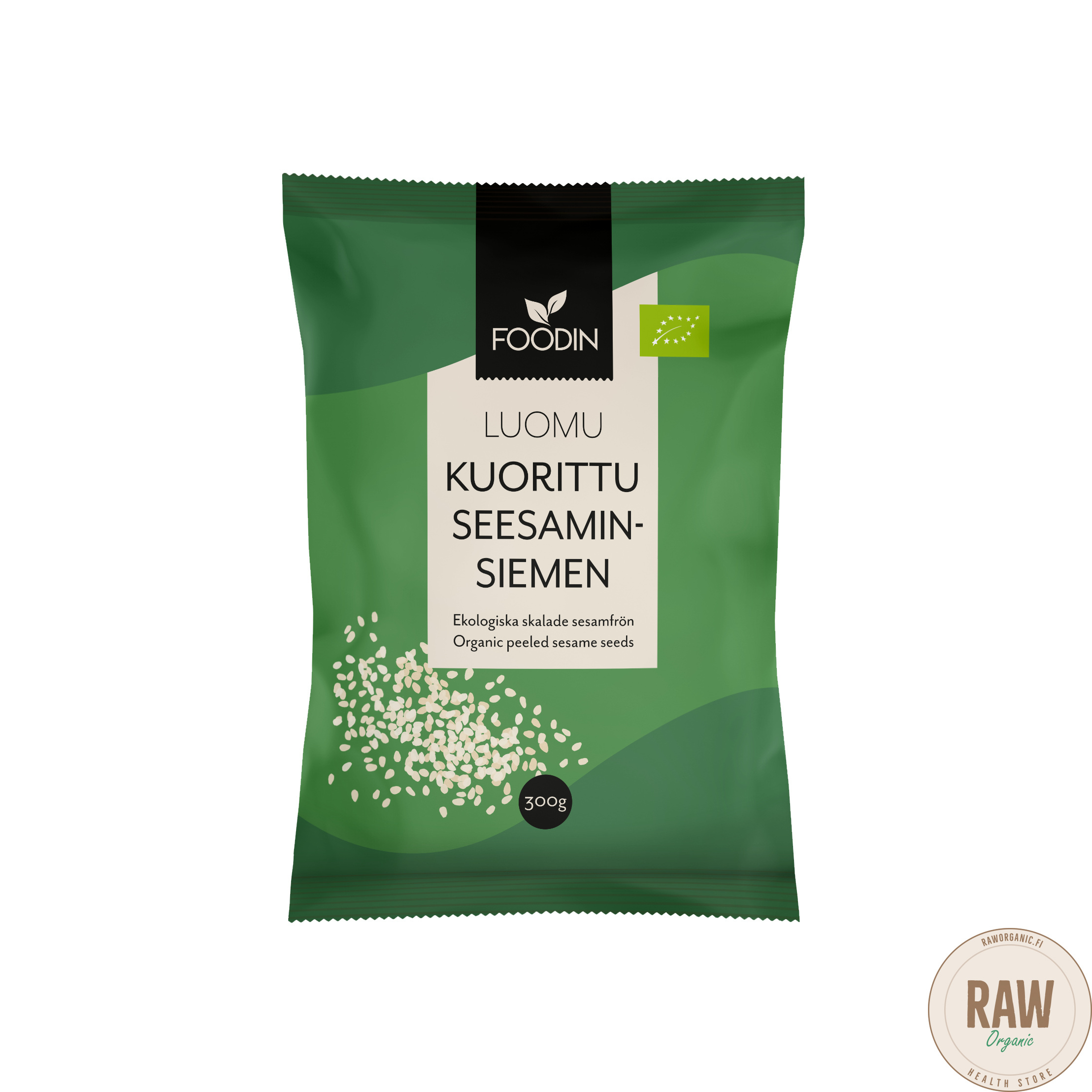
Sesame seeds are familiar to many through Japanese cuisine, and for many, the first encounter comes via delicious sushi rolls.
Sesame seeds are at their best sprinkled on top of rice and noodle dishes. They deepen the flavour of many Asian dishes and bring a hint of Asia to even the simplest rice dish. Our favourite combination is to sprinkle sesame seeds over vegetables and rice noodles marinated in coconut aminos and chilli. Sesame seeds are also a great addition to homemade sushi – sprinkle them on top of the finished roll, or roll the maki in the seeds.
Due to their small size, sesame seeds also work well in spice blends. Try mixing sesame seeds into coarse salt or herbs.
In addition to Asian cuisine, sesame seeds also have their place in baking, in raw chocolate, or even in a smoothie. We recommend soaking sesame seeds for a few hours or even overnight to make them softer and plumper, so they blend easily into smoothies or doughs. In a smoothie, sesame seeds add a rich texture and a soft flavour.
You can find Jaakko Halmetoja’s easy guide to activating nuts and seeds here.
Contains no additives or preservatives.
The generally recommended daily portion of seeds for an adult is about two tablespoons, and one for a child. However, we test every incoming batch and do not bring to market any products with high concentrations of nickel or cadmium, so you can use Foodin’s organic seeds with peace of mind. You can read more, for example, about the oilseed monitoring and control project on the Finnish Food Authority’s website.
Packed in a facility that also handles nuts (cashews, Brazil nuts, pecans, macadamias, hazelnuts and walnuts), almonds, sesame seeds, milk protein and gluten-free oats.
Sesame seeds are familiar to many from Japanese cuisine, and for many the first encounter happens through delicious sushi rolls.
Sesame seeds are at their best sprinkled on top of rice and noodle dishes. They deepen the flavour of many oriental dishes and bring a hint of Asia to even the simplest rice dish. Our favourite combination is to sprinkle sesame seeds over vegetables and rice noodles marinated in coconut aminos and chilli. Sesame seeds are also a great addition to homemade sushi – sprinkle them on top of the finished roll, or roll the maki in the seeds.
Because of their small size, sesame seeds are also suitable for spice mixes. Try mixing sesame seeds into coarse salt or herbs.
In addition to Asian cuisine, sesame seeds have their place in baking, in raw chocolate, or even in a smoothie. We recommend soaking sesame seeds for a few hours or even overnight to make them softer and plumper, so they blend easily into smoothies or doughs. In smoothies, sesame seeds add a rich texture and soft flavour.
Soak the sesame seeds overnight and rinse them thoroughly. If you want to sprout the seeds, let them germinate in a sieve for 24 hours and rinse them twice during that time. If you want the sprouted seeds to keep longer, you can season them with your favourite spices after sprouting and dry them in the oven. You can find Jaakko Halmetoja’s easy instructions for activating nuts and seeds here.
Contains no additives or preservatives.
The generally recommended daily intake of seeds for an adult is about two tablespoons, and one for a child. However, we test every incoming batch and do not bring to market products with high levels of nickel or cadmium, so you can safely use Foodin’s organic quality seeds. You can read more about the oilseed screening and monitoring project, for example, on the Finnish Food Authority’s website.
Packed in a factory that handles nuts (cashew, brazil, pecan, macadamia, hazelnut and walnut), almonds, sesame seeds, milk protein and gluten-free oats.
Energy: 2740 kJ/655 kcal
Fat: 59.5 g – of which saturates: 8.6 g
Carbohydrates: 1.2 g – of which sugars: 1 g
Protein: 24.6 g
Salt: 66,2 mg
Organically produced hulled SESAME seed
Product information is based on details provided by the manufacturer, and the manufacturer may change the composition. Always check the ingredients, nutritional information and directions on the package before use.
| Weight | 0,31 kg |
|---|---|
| Ingredients | Luomutuotettu chia-siemen |
| Age group | |
| Gender | |
| Unit | kpl |
| Best before date and batch number | Marked on the package |



Reviews
There are no reviews yet