Only 79,00€ away from free shipping
No products in the cart.
4,50 €
In stock
Order within 13 h 54 min and we ship today
Arrives approx. Thu 19.11. – Mon 23.11. · to a pickup point or your home
Free collection in store, usually the same day
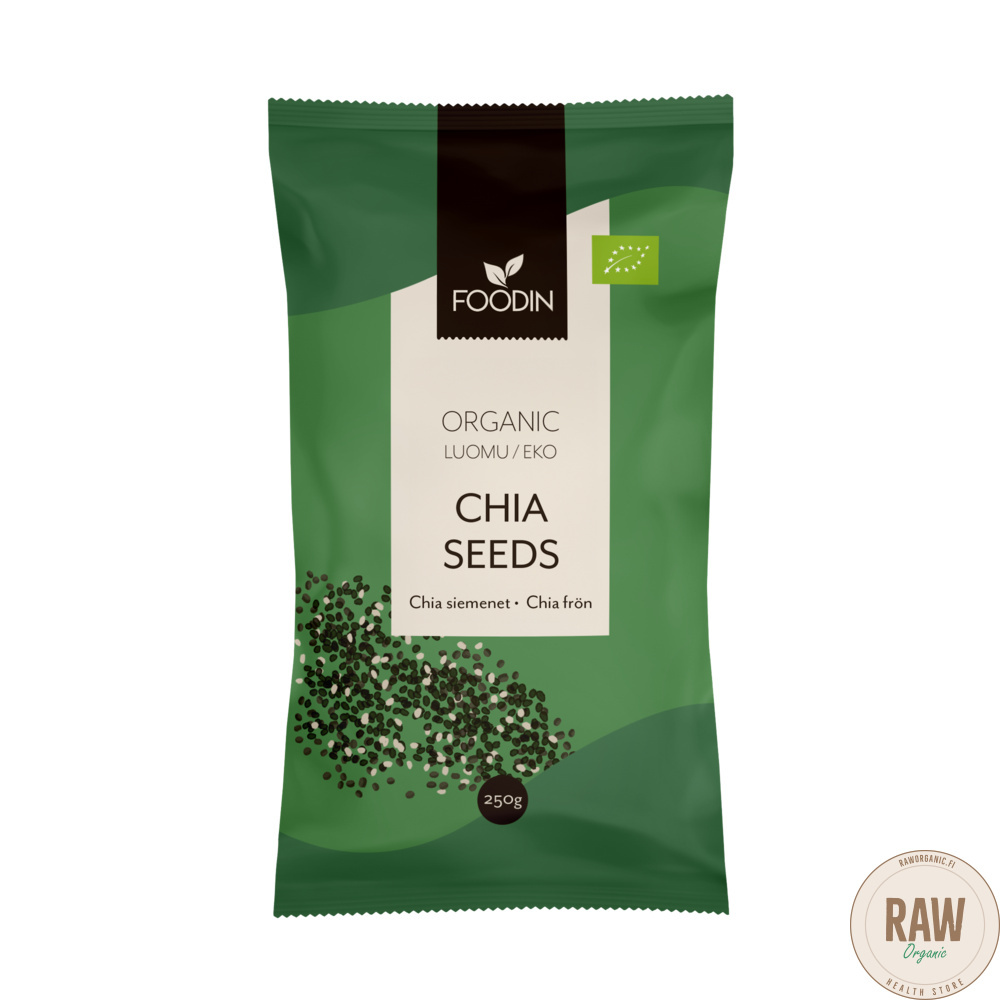
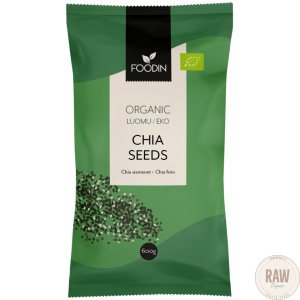
Originally from South America, chia seed has achieved global top popularity due to its versatility and many uses. The word “chia” means oily in the Aztec language, and this tiny seed is indeed a good source of fatty acids. Chia seeds contain omega-3 and omega-6 fatty acids in an ideal ratio of 3:1.
Chia binds a lot of liquid to itself, and many people use the seeds by first soaking them in water. This way, it is possible to make a jelly or gel from chia seeds, which can be used to replace, for example, eggs in vegan baking. Chia seeds soaked in water are also a hearty and filling option, and they are easy to customise into popular overnight oats, puddings and smoothies. Our customers love to combine chia seed with raw chocolate and various fresh and dried fruits, among other things. What could be better than enjoying a chocolate pudding or apple cinnamon pudding during an afternoon break or a slow breakfast? Coconut, vanilla and softly sweet berries also pair well with the mild, soft flavour of chia seeds.
Chia seeds are also available in a larger 600 g package.
Chia seeds are rich in:
Chia seeds are an excellent source of fibre and they are also one of the best plant sources of omega-3 fatty acids.
Chia seed binds a lot of liquid to itself, and many people use the seeds by first soaking them in water. It is good to soak chia seeds in liquid for at least half an hour or preferably even overnight. This way, it is possible to make a jelly or gel from them, which can be used to replace, for example, eggs in vegan baking. Chia seeds soaked in water are also a hearty and filling option, and they are easy to customise into popular overnight oats, puddings and smoothies.
Contains no additives or preservatives. The general recommended daily portion of seeds for an adult is about two tablespoons, and one for a child. However, we test every incoming batch, and we do not bring products to the market that would have high concentrations of nickel or cadmium, so you can use Foodin’s organic quality seeds with peace of mind. You can read more, for example, about the mapping and monitoring project of oil crop seeds on the Finnish Food Authority’s website.
Allergen information: Packed in a factory that handles nuts (cashew, brazil, pecan, macadamia, hazelnuts and walnuts), almonds, sesame seeds, milk protein and gluten-free oats.
“Every morning I eat chia porridge, which I soak with Foodin’s coconut water and coconut milk. I always mix in vanilla-flavoured whey protein as well, and sprinkle in some berries.”
– Maria Jalkanen, Foodin’s creative director and entrepreneur
Originally from South America, the chia seed has achieved global top popularity thanks to its versatility and many uses. The word “chia” means oily in the Aztec language, and this little seed is indeed a good source of fatty acids. Chia seeds contain omega-3 and omega-6 fatty acids in an ideal ratio of 3:1.
Chia absorbs a lot of liquid, and many people use the seeds by first soaking them in water. In this way, it is possible to prepare a jelly or gel from chia seeds, which can be used to replace, for example, eggs in vegan baking. Chia seeds soaked in water are also a hearty and filling option, and they are easy to customize into popular overnight oats, puddings, and smoothies. Our customers love to combine chia seeds with, among other things, raw chocolate and various fresh and dried fruits. What could be better than enjoying, for example, chocolate pudding or apple-cinnamon pudding during an afternoon break or a leisurely breakfast? Coconut, vanilla, and softly sweet berries also pair well with the mild, soft flavor of chia seeds.
Chia seeds are also available in a larger 600 g package.
Chia seeds are rich in
Chia seeds are an excellent source of fiber and they are also one of the best plant sources of omega-3 fatty acids
Chia seeds absorb a lot of liquid, and many use the seeds by first soaking them in water. It is good to soak chia seeds in liquid for at least half an hour or preferably even overnight. In this way, it is possible to prepare a jelly or gel from them, which can be used to replace, for example, eggs in vegan baking. Chia seeds soaked in water are also a hearty and filling option, and they are easy to customize into popular overnight oats, puddings, and smoothies.
Contains no additives or preservatives. The general recommended daily serving of seeds for an adult is about two tablespoons, and for a child one. However, we test every incoming batch and do not bring to market products with high concentrations of nickel or cadmium, so you can use Foodin’s organic-quality seeds with peace of mind. You can read more, for example, about the oilseed mapping and monitoring project on the Finnish Food Authority’s website.
Packed in a factory that handles nuts (cashews, Brazil nuts, pecans, macadamia nuts, hazelnuts, and walnuts), almonds, sesame seeds, milk protein, and gluten-free oats.
“Every morning I eat chia porridge, which I soak in Foodin’s coconut water and coconut milk. I always mix in vanilla-flavored whey protein and sprinkle berries on top.” – Maria Jalkanen, Foodin’s creative director and entrepreneur
Energy: 1922 kJ / 459 kcal
Fat: 32.6 g
– of which saturates: 2.8 g
– omega 6: 6.2 g
– omega 3: 21.8 g
Carbohydrates: 0.2 g
– of which sugars: 0 g
Fibre: 34.4 g
Protein: 22.9 g
Salt: < 0.1 g
Organically produced chia seeds
Product information is based on details provided by the manufacturer, and the manufacturer may change the composition. Always check the ingredients, nutritional information and directions on the package before use.
| Weight | 0,25 kg |
|---|---|
| Ingredients | Luomutuotettu chia-siemen |
| Age group | |
| Gender | |
| Unit | kpl |
| Best before date and batch number | Marked on the package |




Reviews
There are no reviews yet